
If you have been searching for ways to reduce inflammation through food, you may have come across countless lists of “anti-inflammatory foods” and “inflammatory foods”.
One article might tell you to eat more turmeric. Another might recommend cutting out gluten, dairy or sugar. With so much conflicting advice available, it can be difficult to know what an anti-inflammatory way of eating actually looks like in everyday life.
The good news is that it does not need to involve expensive superfoods, complicated recipes or cutting out large groups of foods.
There is also no single meal that can “switch off” inflammation.
Instead, research supports looking at the overall pattern of eating over time. Dietary patterns rich in fruits, vegetables, wholegrains, legumes, nuts, seeds, fish and unsaturated fats may help support overall health and a healthy inflammatory response.
Below is an example of what an anti-inflammatory day of eating could look like, including one breakfast, lunch and dinner.
Breakfast: Berry, Yoghurt and Oat Bowl
What you might include:
- Greek yoghurt
- Rolled oats
- Mixed berries
- Chia seeds
- Walnuts
- A drizzle of raw honey
This breakfast includes a variety of foods that provide different nutrients.
Berries contain fibre and a range of naturally occurring plant compounds, including antioxidants. Using fresh or frozen berries is equally practical, depending on what is available to you.
Oats are a wholegrain and provide fibre, including beta-glucan. Wholegrains can be an important part of a balanced dietary pattern and are not something that needs to be avoided unless medically necessary.
Greek yoghurt provides protein and important nutrients such as calcium. Dairy foods do not automatically cause inflammation, and many people can include dairy as part of a healthy eating pattern.
Chia seeds and walnuts provide fibre and unsaturated fats. Walnuts and chia seeds also contain plant-based omega-3 fats.
Together, this meal provides a combination of carbohydrates, protein, fats and fibre, which can help make breakfast satisfying while adding variety to your diet.
Lunch: Salmon, Grain and Vegetable Bowl
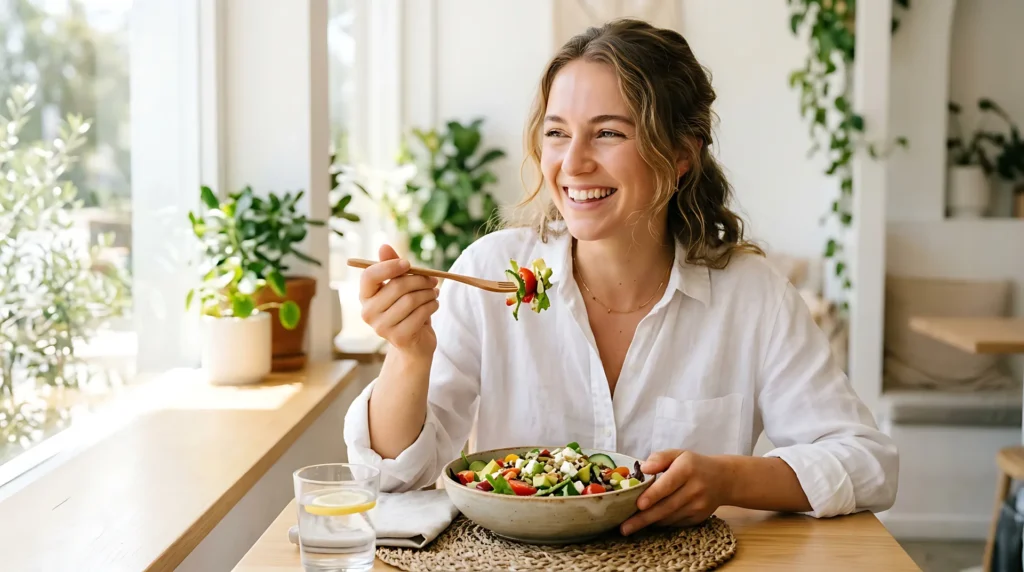
What you might include:
- Grilled or tinned salmon
- Brown rice, quinoa or another wholegrain
- Mixed leafy greens
- Roasted vegetables
- Avocado
- Extra virgin olive oil and lemon dressing
This lunch includes several food groups commonly seen in dietary patterns associated with positive health outcomes.
Salmon is an oily fish and provides omega-3 fats. Including fish regularly can be a practical way to increase your intake of these important fats.
Wholegrains such as brown rice or quinoa provide carbohydrates for energy as well as fibre and other nutrients.
Vegetables add colour, fibre, vitamins and a variety of plant compounds. Rather than worrying about finding one “best” vegetable, aim for variety across your week.
Avocado and extra virgin olive oil provide predominantly unsaturated fats. Extra virgin olive oil is commonly included in Mediterranean-style eating patterns, which are frequently studied in relation to inflammation and overall health.
Dinner: Lentil and Vegetable Curry With Brown Rice
What you might include:
- Lentils
- A variety of vegetables
- Tomato-based sauce
- Herbs and spices
- Brown rice
- A side of yoghurt, if desired
Lentils are a source of plant-based protein and fibre. Legumes, including lentils, chickpeas and beans, can be an affordable and versatile addition to your meals.
Adding a variety of vegetables increases the range of nutrients and plant compounds in the meal. Frozen vegetables can be just as nutritious and are often a convenient option for busy households.
Herbs and spices such as turmeric, ginger, garlic and cumin can add flavour to meals. While some individual compounds found in herbs and spices are being studied for their potential effects on inflammation, they are not a replacement for an overall balanced dietary pattern or medical treatment.
What Makes These Meals “Anti-Inflammatory”?
The most important point is that these meals are not magical or special because of one ingredient.
Their potential benefits come from the combination of foods included and how they contribute to your overall eating pattern.
Across the day, these meals include:
- A variety of fruits and vegetables
- Wholegrains
- Legumes
- Nuts and seeds
- Omega-3-rich foods
- Unsaturated fats
- Fibre-rich foods
- Protein from a variety of sources
For people living with chronic inflammation, an overly restrictive approach to food may increase stress and make eating more difficult. Instead, a more sustainable approach is often to focus on gradually adding a wider variety of nourishing foods.
Remember: Food Is Only One Piece of the Puzzle
Chronic inflammation can be influenced by many different factors, depending on the underlying cause.
Sleep, physical activity, stress, alcohol intake, smoking, medical conditions, medications and other lifestyle factors may all play a role.
For this reason, nutrition advice should not be used as a replacement for appropriate medical care.
If you are living with chronic inflammation, autoimmune disease, ongoing pain or another health condition, working with a qualified health professional can help you understand what approach is most appropriate for you.