A Front-Row Seat to Olympic History
It was a quarter of a century ago when Lauren Burns, Olympic gold medallist in Taekwondo, won gold at the 2000 Sydney Olympic Games and made history.
My involvement came as a physiotherapist appointed to the medical team, responsible for weight-classified sports including Taekwondo, boxing, judo and wrestling. I was fortunate to be selected as part of a broader team of doctors, psychologists, dietitians and musculoskeletal therapists.
What makes the moment even more meaningful in hindsight is how strongly it reflects the values we still hold at Hills Street Sports Medicine today. The same hands-on care, problem-solving mindset and athlete-first approach that shaped those Olympic moments continue to guide our team and the way we support patients every day.
The Injury Before the Final
The day before the competition, Lauren had been diagnosed with a fracture to her little finger, an injury that threatened her participation in the gold medal event.
She faced a choice: withdraw altogether or find a practical solution that would allow her to compete and potentially secure Australia’s first gold medal in this relatively unknown sport at the time.
Because she needed to grip and strike with that hand, we decided to make a splint that would allow her to perform those actions, even if at a reduced capacity. We hoped that with adrenaline, determination and the protection of a custom splint, she could rely on her skill and tactical intelligence to take the lead and hold it.
There was a risk that the referee might inspect the splint and rule her ineligible if it was not fully compliant. We took that chance. Fortunately, everything went to plan, and the referee paid no attention to the heavy strapping protecting what was clearly an injured dominant hand.
Dream, Believe, Achieve
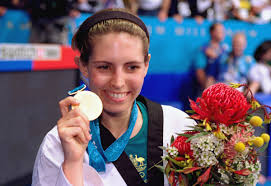
The rest is history. Lauren won the gold medal with composure and grace.
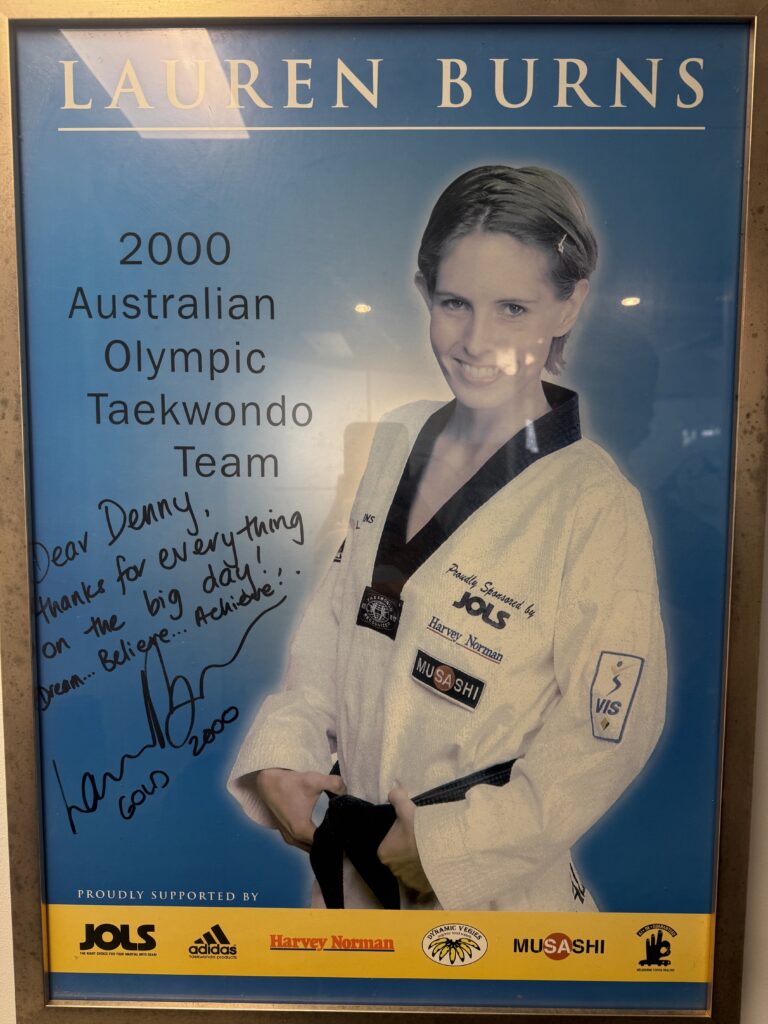
Following the medal presentation, she was interviewed by a reporter and spoke warmly about the support she had received. She also signed a poster thanking me for my help in her victory. It soon became clear that the poster had been prepared before the Olympics — she had already visualised this moment long before it happened.
The words “Dream, Believe, Achieve” were printed across the poster. She had seen this result in her mind before stepping onto the mat, and that confidence and mindset were part of what made her a champion.
A Champion’s Humility
After giving me the poster, Lauren asked if she could borrow my phone to call her boyfriend and share the news. It was one of those wonderfully human moments that cut through the scale of the Olympic Games.
Later, back at the Olympic Village, I noticed Lauren carrying and kissing a man about my age who looked strikingly familiar. It did not take long to realise it was her father, Ronnie Burns, the pop music icon from the 1970s.
I mentioned that if I had known earlier who her famous father was, I might have been a little more star-struck. Without missing a beat, Lauren smiled and replied, “That’s nothing, my mum’s even more famous,” before explaining that her mother, Maggie Burns, had been a well-known dancer from the same era.
More Than a Gold Medal
Stories like this stay with you not only because of the result, but because they reveal what sits behind moments like these — preparation, trust and the ability to make clear decisions under pressure.
Lauren’s win was unforgettable, but it also reflected the value of having the right people around you at the right time. That kind of support does not always draw attention to itself, yet it can make all the difference.
It is a philosophy that has long shaped the team at Hills Street Sports Medicine. With clinicians such as Denny Shearwood helping build that culture over the years, the focus has remained on skilled, practical care that puts the individual first.
Whether supporting elite athletes or helping everyday patients recover from injury, the same principles apply: experience matters, teamwork matters, and the right treatment at the right moment can change everything.